Journal news
The 120th Anniversary of the Russian Maritime Law Society: A Retrospective
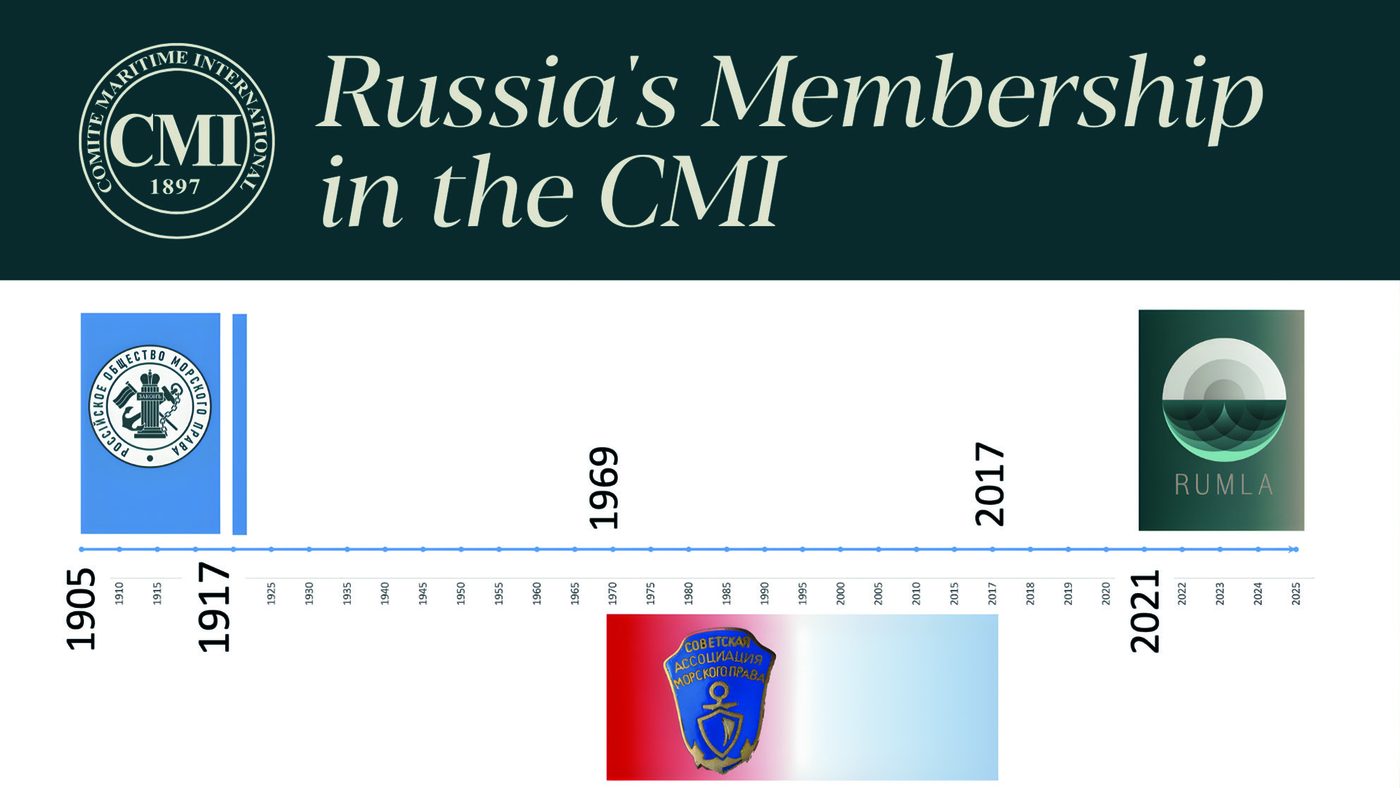
The Rise and Fall of the Russian Maritime Law Society
It was the latter half of the nineteenth century, amid a broader tendency towards the unification of legal norms, that the urge to bring maritime law specialists together began to build. The commercial shipping sector was no exception: in 1897, the Comité Maritime International (CMI) was founded in Antwerp, promoting the establishment of national associations and their affiliation with the CMI. In the Russian Empire, a substantial contribution to this process was made by Grand Duke Alexander Mikhailovich (a grandson of Nicholas I), then serving as head of the Main Directorate of Merchant Shipping and Ports.
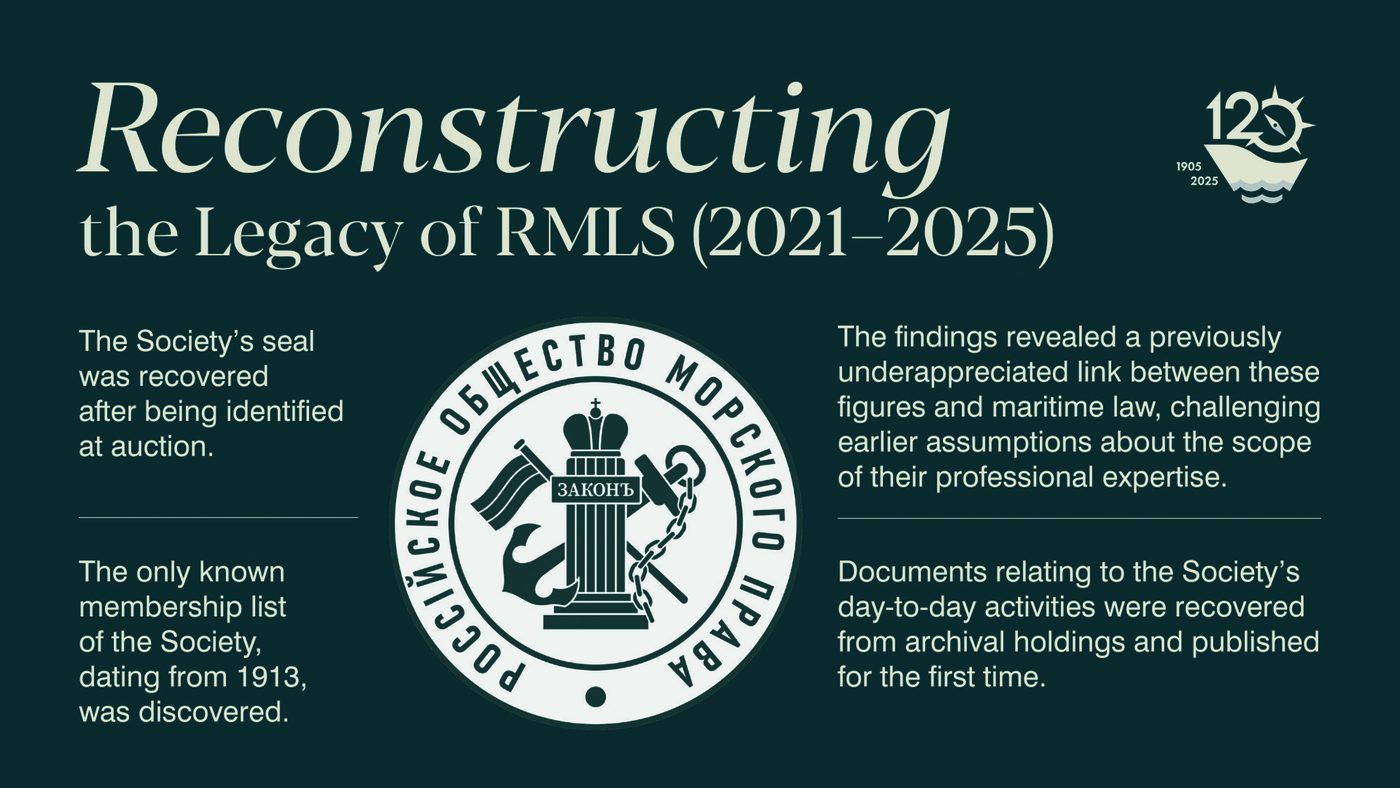
The Russian Maritime Law Society (RMLS) was established on 18 May 1905 and was initially conceived as an elite professional society. Under its charter, membership was restricted to individuals “known for their scholarly or practical work in the field of maritime law or merchant shipping.” The Society’s ranks included distinguished lawyers, maritime theorists and practitioners, military officers, entrepreneurs, financiers and insurers, as well as individuals from less conventional backgrounds, including the composer Nikolai Artsybushev, the ethnographer Ivan Azbelev and the wine manufacturer Johann Beckman. Further biographical information on notable members is available in Maritime Law journal 2/2025, while the history of the society itself is covered in Maritime Law journal 1/2025.
They contributed to the drafting of the large-scale Merchant Shipping Code, represented the Russian Empire at the CMI, and held regular meetings to discuss pressing issues, from maritime mortgages and the limitation of shipowners’ liability to the legal consequences of major maritime casualties, including shipwrecks comparable to the loss of the Titanic. Archival materials we have uncovered and published in Maritime Law journal 1/2025 confirm this.
Following the October Revolution of 1917, the Society effectively ceased its activities, and much of the scholarship and practical work produced by Russian maritime lawyers during their brief but highly active period within the CMI was subsequently lost amid the Civil War and the ensuing wave of repression.
From 2022 onwards, we have undertaken an intensive research effort to reconstruct, piece by piece, the history of Russian Maritime Law Society. Particularly valuable information was uncovered in the Russian State Historical Archive, the National Library of Russia, the Central Naval Archive, and the archives of the Northern Steamship Company. The files of the Main Directorate of Merchant Shipping and Ports are especially noteworthy.
Some discoveries turned out to be genuinely remarkable. Minutes found in the Northern Steamship Company’s archive, for instance, have enabled us to compile the Society’s full membership list of 53 members as of a meeting held in 1913. To date, this remains the only source to provide a full account of the Society’s membership. For those interested in legal history, it provides the names of the people from whom it all began.
The Soviet Period
Following the dissolution of Russian Maritime Law Society, Russia’s presence within the CMI was suspended until the end of the 1960s. The USSR retained its place in the international trade and ratified a number of conventions. There was no choice but to renew the cooperation with other maritime powers, and in 1968, the state authorities established the Soviet Maritime Law Association, which was admitted to the CMI on behalf of the USSR. With the Soviet Union’s collapse, it was reshaped into the International Maritime Law Association, which was ultimately excluded from the CMI following an Assembly vote in 2017.
The RUMLA Chapter
Yet Russia’s representation in the CMI did not end there. Seven years ago, a new chapter began when three Russian lawyers specialising in maritime law (Konstantin Krasnokutskiy, Konstantin Putrya and Filipp Vagin) established the Maritime Law Association.
Given that maritime law is bound up with foreign elements, we knew that the field could scarcely be developed without taking account of foreign experience, Konstantin Putrya, remarked at the conference: “That is how the idea was born to establish a domestic forum for discussing maritime law issues, and then to restore membership in the CMI.”
RUMLA’s path back into the CMI unfolded in three stages:
1. The Association’s President, Konstantin Krasnokutskiy, held discussions with the CMI leadership. They noted that the previous Russian association had failed to fulfil its obligations, including its financial ones.
2. The application form was prepared and filed with the CMI in spring 2021. It was accompanied by two independent guarantees from the law firms NAVICUS.LAW and Fortis Juris, totaling several tens of thousands of euros, to secure the repayment of outstanding Soviet debts and the payment of ongoing membership contributions.
3. The CMI Executive Committee examined the application and, by autumn 2021, RUMLA’s admission as Russian Maritime Law Association was put before the Assembly. With 98% in favour, the CMI accepted RUMLA into membership.
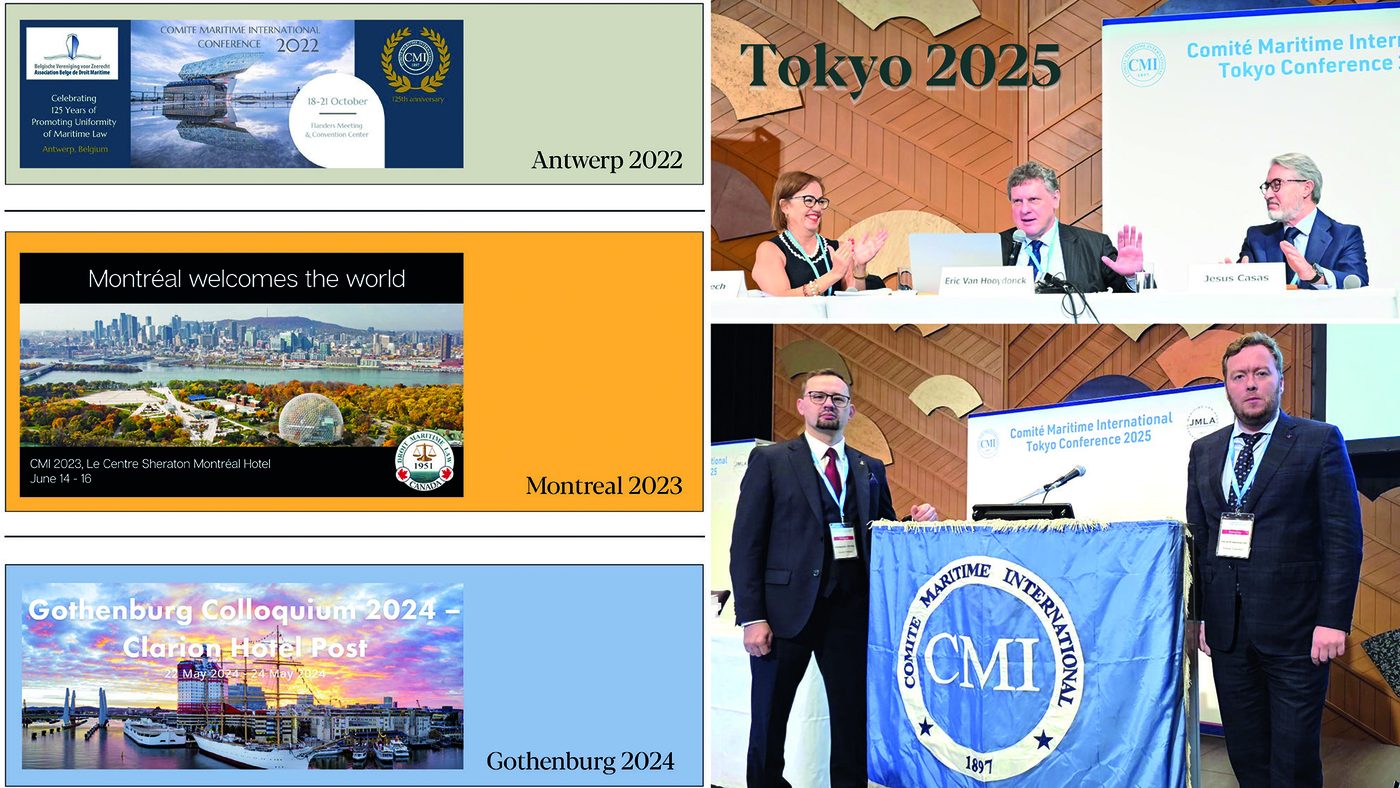
In 2022, Russia’s military invasion of Ukraine jeopardised continued membership in the CMI. The autumn Assembly of the Comité Maritime International in Antwerp was due to consider Russia’s exclusion. Negotiations with the CMI leadership were challenging, but we succeeded in obtaining important backing from several countries, Krasnokutskiy noted: “We were able to preserve our membership because RUMLA made a clear and public commitment to the fundamental principles of international law. Those who did not adhere to these principles withdrew from the Association voluntarily.”
As things stand, we are one of the few Russian industry associations that has succeeded in maintaining representation in a major international organisation.
Summing up the Association’s steps forward to date, Konstantin Krasnokutskiy and Konstantin Putrya highlighted the progress that was notably reached in educational and outreach work: over five years, it has evolved from publishing regular maritime law news digests to launching its own federal media outlet. Since 2021, RUMLA has also published Maritime Law journal, the first bilingual (Russian–English) scholarly and practice-oriented journal of its kind in Russia, which you are reading now. Moreover, in 2025, the Association was able to:
– publish four issues of Maritime Law journal;
– participate in the Comité Maritime International’s Tokyo conference and vote for the adoption of the Lex Maritima (see Maritime Law journal 2/2025 for details);
– hold a maritime-law essay prize with more than 30 participants, including students from Russia’s leading universities;
– hold a seminar on limitation of shipowners’ liability (for further detail, see Maritime Law journal 3/2025), featuring Anna Arkhipova, Vice-President of the Maritime Arbitration Commission under the Russian Chamber of Commerce and Industry, as a speaker;
– launch an online discussion on industry developments involving new members of RUMLA;
– draft the concept for the Association’s Telegram channel, scheduled to launch in January 2026.
Conference Panel Discussion
The second half of the programme was devoted entirely to six pressing issues of practical relevance:
• Raising young professionals in maritime law.
• Developing specialised training programmes for the judiciary.
• Changing practice in maritime disputes: MAC cases and the obstacles to recognising and enforcing foreign arbitral awards in Russia.
• How widely used and effective mediation is in resolving maritime disputes.
• Needs to be changed in the statutory framework to strengthen the regulation of maritime shipping.
• How shipowners can navigate relations with the state in the new reality landscape.
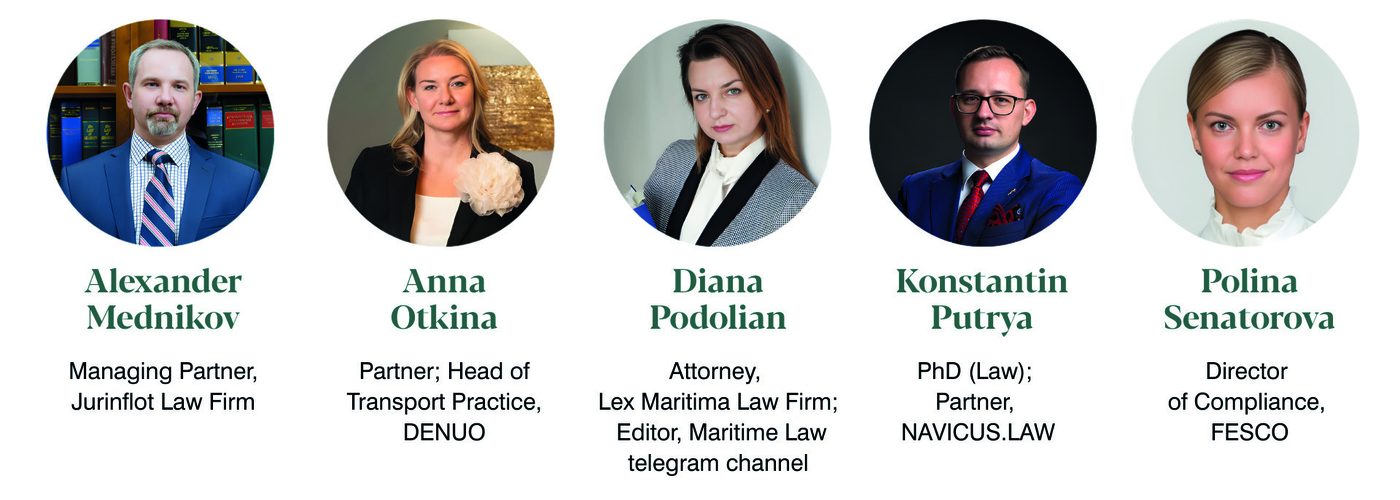
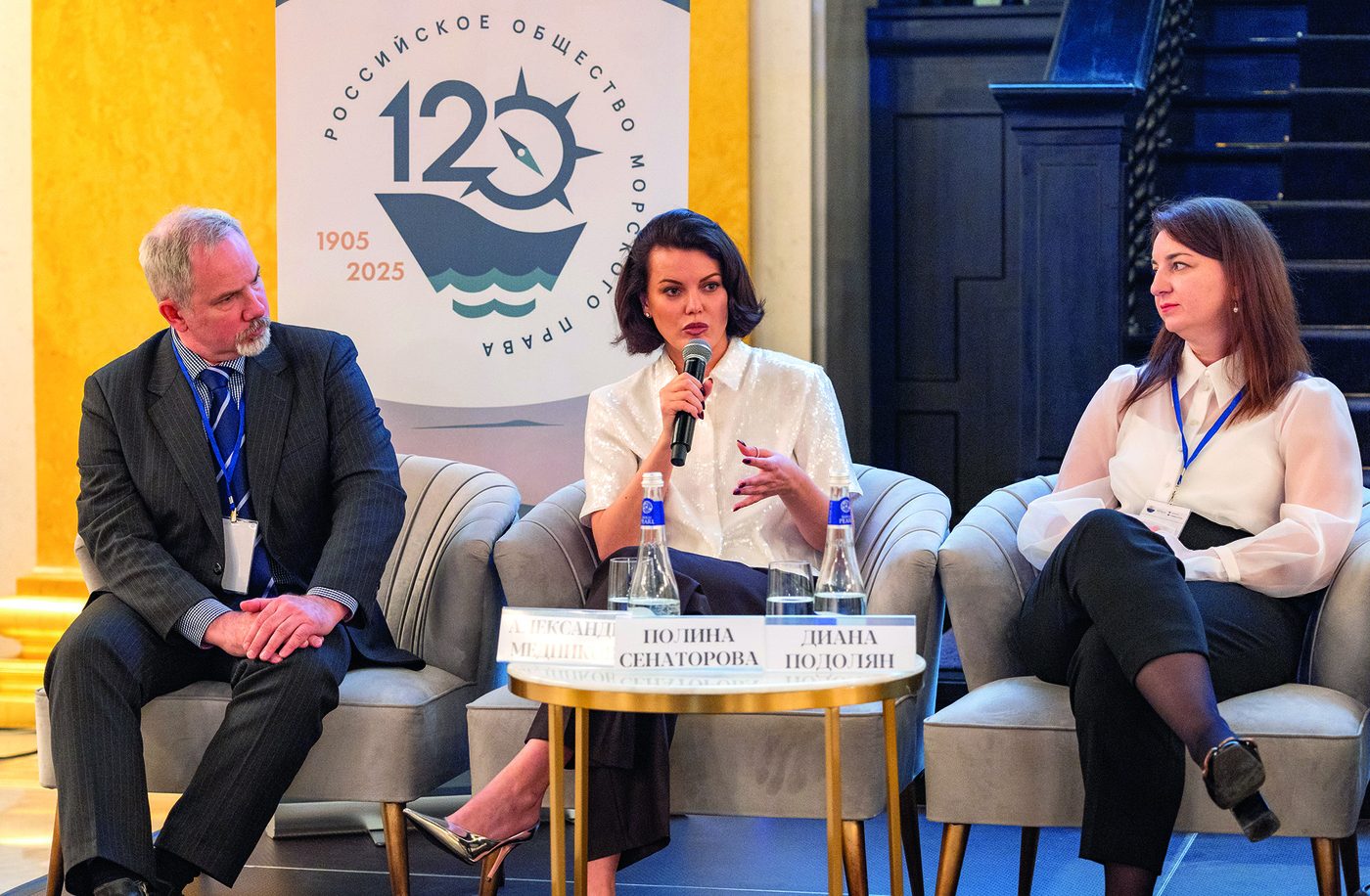
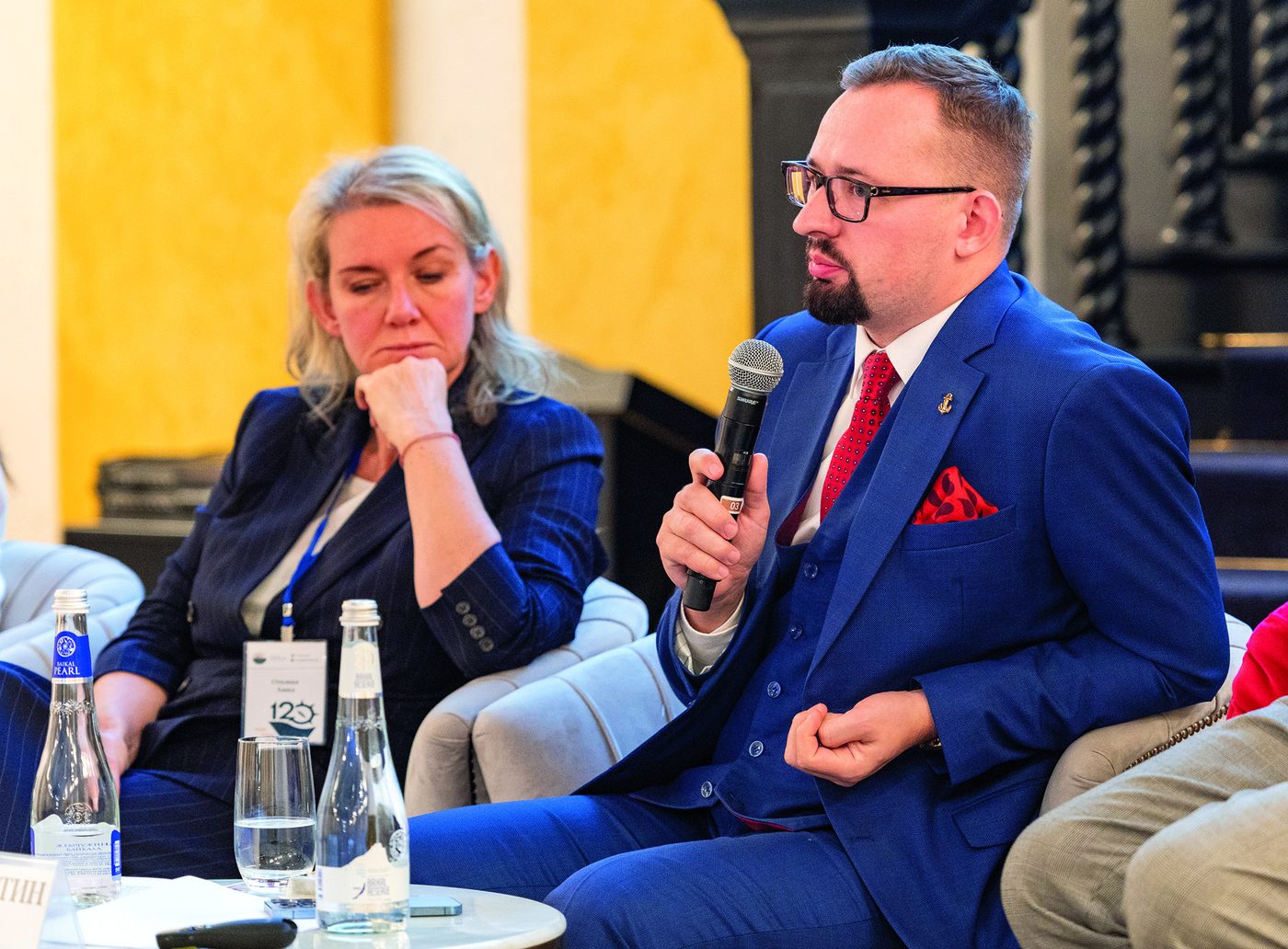
The above topics were examined in a talk-show format in a session involving five speakers.
The discussion made clear that the sector’s most acute challenge remains the generational gap. There is a clear shortage of young maritime law specialists, not only among practitioners but also among scholars and arbitrators. Experienced figures with hard-won expertise are retiring, while the next generation is not coming through quickly enough to learn from them, Konstantin Putrya warned. Without a platform for passing on knowledge and drawing younger lawyers into the field, vital competencies could be lost. As a result, firms are increasingly forced to train new staff from scratch. Illustrating the point, Anna Otkina explained that she and her colleagues recruit promising young lawyers and teach them the hard skills required for maritime practice.
A further concern for maritime lawyers in Russia is the impact of sanctions on shipping and maritime commerce. Polina Senatorova observed that it is becoming ever more challenging to account for the full range of sanctions-related risks. Restrictions now extend to ports as geographic entities, the masters of particular vessels, special economic zones, insurers and other major commercial organisations. Logistics firms and shippers must therefore screen a list of variables for sanctions exposure, at a significant cost in time and effort. To limit these costs, Senatorova added, Russia needs stronger domestic regulation that serves its own interests.
Meanwhile, legislative activity in the field of maritime law has been extremely sluggish. In the 26 years since the Merchant Shipping Code (MSC) was adopted, an extensive body of case law has accumulated, yet it is barely structured. Information Letter of the Supreme Commercial Court of 2004, the only significant guidance, has long since become somewhat obsolete. In the view of Konstantin Putrya, a point echoed by Alexander Mednikov, there is now an urgent need for a new reference point. The industry is looking to the Supreme Court of the Russian Federation for either a full Plenum Resolution on the application of the MSC or, at the very least, a detailed review of case law. This would reduce divergences in judgments across different courts, ease pressure on the judiciary, and provide businesses with the legal certainty they crave.