Journal news
A Brief History of the Comité Maritime International and Russia’s Membership
1. Value of Maritime Agreements
Since ancient times, seafaring has been one of the main ways of accomplishing trade. The seas have not belonged and do not belong to anyone, and people must agree on conduct at sea. Merchants from different states have to concur on the terms for carriage by sea, and a uniform or at least similar and understandable regulation across jurisdictions is in the interest of all. Thus, it is the freedom of the high seas that teaches all manner of men to find common grounds and concord.
One of the first sets of agreements in merchant shipping was the Rhodian Sea Law, Νόμοσ Ροδίων Ναυτικόσ, though it had no connection with the island of Rhodes. It was a set of agreements of the seafarers that sailed the Mediterranean Sea.
The Rhodian maritime customs with the commentaries of Roman jurists were included in the Digests of Justinian (Book 14). Subsections (titles) dealt with the liability of the master of the ship for the damage caused; the master’s right of jettison in case of an accident and subsequent settlement between the ship and the cargo, and a number of other problems which have not lost their acuteness to the present day.
The gradual demise of ancient Mediterranean cultures led to the decline in the orderliness of merchant shipping. The revival of maritime trade agreements began in the Middle Ages with the emergence of documents named codifications of maritime rules and customs (Barcelona Codification, Visby Codification, etc.). Those were prototypes of modern international maritime conventions2. However, such codifications did not become universal because of the medieval fragmentation of social and political systems.
Albert Lilar noted that in the absence of common norms lost since antiquity, seafarers and merchants could act in their own interests with no restrictions at all, but such permissiveness allowed others to act against them with impunity, which formed an antagonistic and hostile environment on the high seas3. The first document aimed at correcting this situation and returning to the antique orderliness was The Great Ordinance of Marine of August 1681, which made a liberal use laws and customs of the past4. It was the first attempt to harmonise different norms and customs, and it was also a “source of inspiration” for those who, two centuries later, drafted the first conventions in the sphere of international maritime law.
Subsequently, the concept of how to unify rules of conduct at sea has evolved and led to the formation of what in the modern world is called the “international law of the sea / maritime law” – international treaties and conventions which are usually drafted by non-governmental organisations and open for ratification (i.e. incorporation into the national legal system).
2. Establishment of the Comité Maritime International
In the second half of the XIX century, lawyers and lawmakers of the European countries have recognised the necessity to unify the maritime law, and various international associations, usually non-governmental ones, began their activities towards such a unification.
In 1857, the National Association for Social Science was founded in London, which drew up in 1864 the first rules designed to codify general average.
In 1873, the Association for the Reform and Codification of the Law of Nations was founded, which preceded the creation of the International Law Association.
In 1890, the latter Association sponsored the York/Antwerp Rules, a set of rules on general average widely acknowledged in international merchant shipping. The rules define general average and deal with the allocation of losses amongst the parties to the common maritime adventure – the ship, the cargo and freight.
At that time, a young barrister from Antwerp Louis Franck took the initiative in Belgian business circles to set up a practice-oriented maritime law association. In his view, the association’s activities should be aimed at bridging gaps and removing inaccurate legal norms in the maritime industry, as well as bringing unification through discussions on draft international treaties. His idea was supported by the International Law Association, and the world’s first Maritime Law Association was established in Belgium on 29 April 1896. Its founders were the Belgian minister August Beernaert, the maritime insurance entrepreneur Charles Le Jeune and the barrister Louis Franck. It was them who drafted the policy of the future Comité Maritime International, according to which the Comité activities would not be aimed at achieving abstract and theoretical solutions in the maritime law sphere, but at the real needs of merchants, seafarers and insurers. In addition, the Comité guaranteed equality of discussion for all its members – national maritime law associations and independent specialists from different countries. Subsequently, se veral more national maritime law associations were formed, and the Comité Maritime International was formally constituted on 6 June 1897, comprising the national maritime law associations.
June 6, 1897, is considered as the date of the formal establishment of the Comité, but its activities began at least a year before that date5. For example, the activities of an international organisation aimed at the comprehensive unification of maritime law had already been mentioned in a letter from the Comité Maritime International to the International Law Association dated 2 July 1896.
3. Activities of the Comité Maritime International
Today the Comité Maritime International is the oldest international organisation in the field of maritime law6. Since its formal establishment in 1897, the Comité has been involved in the drafting of almost every known maritime convention.
Initially, the Comité’s international conferences were held in cooperation with the Belgian Government and were known as the “Brussels Diplomatic Conferences on Maritime Law”. The conferences adopted international conventions over a period of about 80 years. In particular, important maritime law instruments were adopted at these conferences, such as the Convention for the Unification of Certain Rules of Law respecting Assistance and Salvage at Sea, 1910, the 1924 Hague Rules, which were designed to unify maritime carriage under bills of lading, and the 1968 Protocol to the Rules (the Hague-Visby Rules). Subsequently, the Legal Committee of the International Maritime Organization (IMO) was established and took over the drafting and amendment of the conventions. Thus, the Hague-Visby Rules were amended by the 1979 Protocol and were already drafted by the IMO.
The Comité Maritime International currently exists as the main consultant to the IMO7 and drafts international conventions which are adopted at IMO meetings. In addition, the Comité cooperates with other international organisations such as the United Nations Commission on International Trade Law (UNCITRAL).
In 1997, the Comité has been granted consultative status within the United Nations.
One of the recent projects, in which the Comité is involved, is the Convention on the Judicial Sale of Ships. This instrument is intended to solve the problem of the deletion of a vessel from the ship registry of one state in case where a decision for the judicial sale of the vessel was made in another state. The Convention is scheduled to be adopted in 2022.
4. Russia in the Comité Maritime International
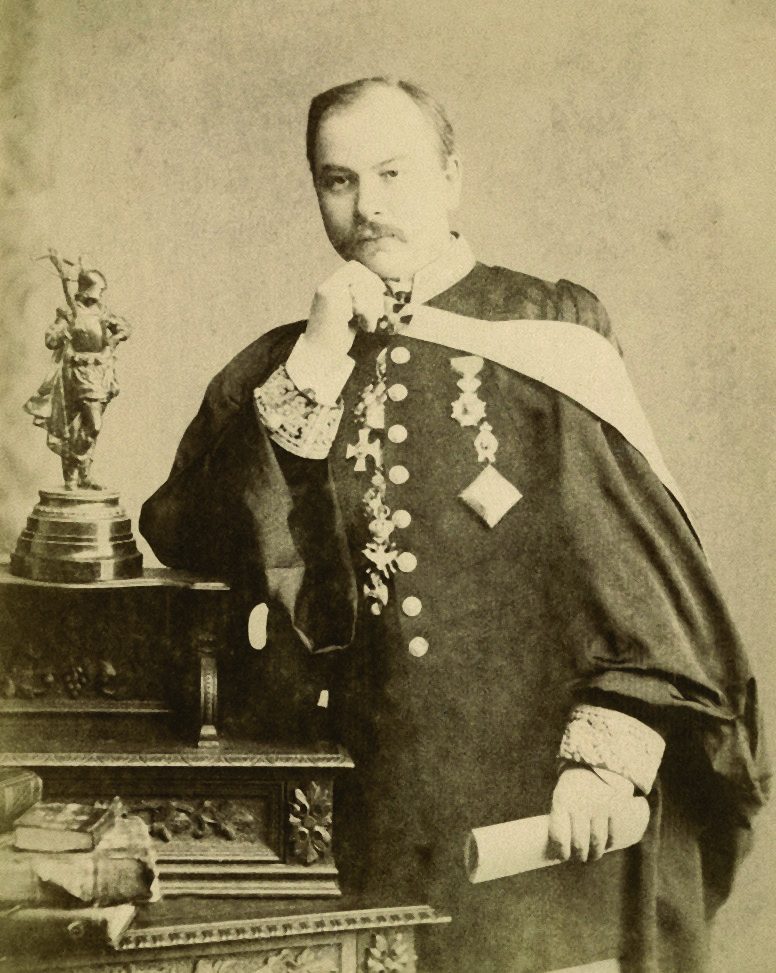
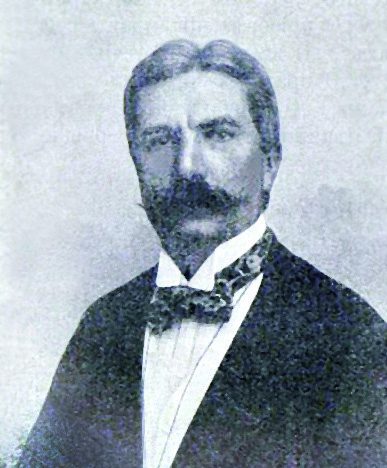
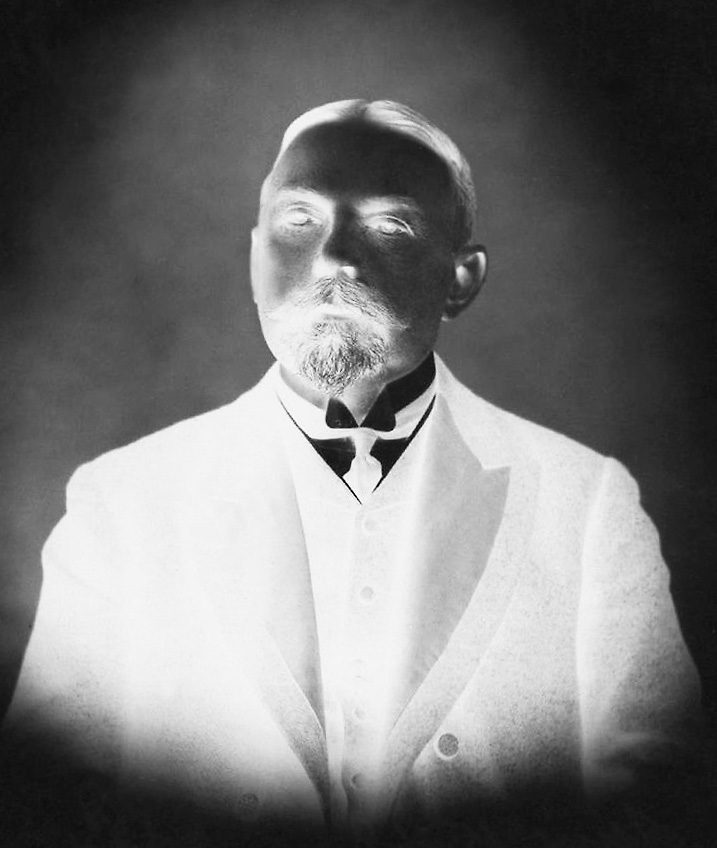
Russia has had representatives in the Comité since its establishment in 1897. Fyodor Fyodorovich Martens, a professor at St. Petersburg University, has been a member of the Comité since its inception. He was also directly involved in the 1897 Comité Conference in Brussels8.
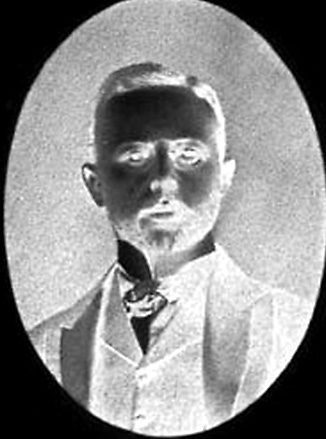
The 1904 and 1905 Comité conference bulletins list two more members representing the Russian Empire: Mikhail Alexandrovich von Taube, Adviser to the Ministry of Foreign Affairs9, and Ivan Alexandrovich Ovchinnikov, Lieutenant Colonel (and later Major General) of the Russian Imperial Navy10. I.A. Ovchinnikov also participated in the 1909 Comité Conference in Bremen11 and the 1913 Conference in Copenhagen12.
Fyodor Fyodorovich Martens (1845–1909)
According to the 1909 Conference Bulletin, a member of the Comité was Sigismund Lewis from St. Petersburg13.
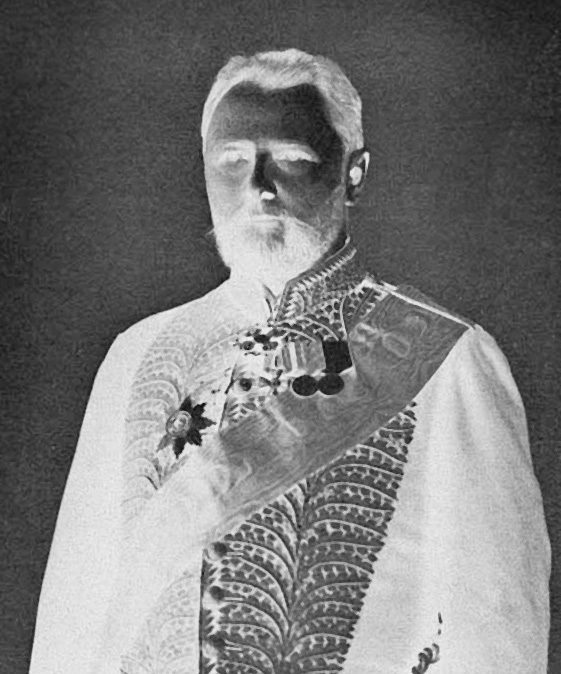
In 1905–1907, the Russian Maritime Law Society14 was established. This Society was listed as the Russian national association in the 1907 Comité Conference Bulletin. The meeting of the Comité was attended by Sergei Vasilievich Rukhlov – Chairman of the Society, Privy Councillor, member of the State Council; Joseph Ivanovich Karnitskiy – Vice Chairman of the Society, Senator, Chairman of the Commission for drafting the Maritime Code, and Valerian Eduardovich Grevs – Secretary of the Society, a notary15. V. E. Grevs took part in the 1907 Comité Venice Conference as a delegate of the Russian Association16.
Mikhail Alexandrovich von Taube (1869–1961)
Sergei Vasilievich Rukhlov (1852–1918)
In the 1911 and 1913 Conference Bulletins, the membership of the Russian Maritime Law Society changes. The Chairman of the Society is Georgiy Georgievich Steblin-Kamenskiy, Privy Counsellor, Legal Adviser to the Maritime Ministry; the Vice-Chairman is Mikhail Mikhailovich Benislavskiy, Manager of East Asian Shipping; the Secretary of the Society is Mr Linden, Court Adviser, Director of the Merchant Marine Department17.
The last mention of the Russian Maritime Law Society as a national association can be found in the 1921 Antwerp Conference Bulletin of the Comité. However, a note was made that the composition of the bureau is given as of the 1913 Copenhagen Conference18. Apparently, the Comité had no information on the status of the Russian association.
Iosif Ivanovich Karnitsky (1840–1914)
The Russian members M.A. von Taube, I.A. Ovchinnikov, and Sigismund Lewis were mentioned for the last time in the 1949 Conference Bulletin in 1949, but as “Deceased Members”19.
The job done by the representatives of the Russian Empire in the Comité was swallowed up by the dramatic events of the Great October Socialist Revolution, the Civil War, the subsequent repressions, and the Second World War. All contacts and experience gained by the previous Russian maritime lawyers were lost. For example, it is easier to find the information on the activities of the representatives of the Russian Empire in the Comité at the Comité’s website rather than in the archive documents in the depths of modern Russia.
Georgiy Georgievich Steblin-Kamenskiy (1855–1935)
The first fifty years of the Soviet regime, where private property was abolished, and the economy was totally controlled by the state, resulted in international private maritime law being of little interest to Soviet lawyers. However, the necessity to participate in international trade compelled the USSR to ratify some international conventions, and Soviet representatives gradually returned to work with their counterparts in other states.
Mikhail Mikhailovich Benislavskiy (1860–1933)
According to the records of the Comité Maritime International, the Soviet Association of Maritime Law joined the Comité in 196920. Georgy Maslov, Victor Ustinov, Ida Barinova, Anatoly Kolodkin, and a number of other experts have attended the Comité meetings on behalf of the Soviet Association of Maritime Law21. After the collapse of the USSR, the Soviet Association of Maritime Law was transformed into the Interregional public organisation International Maritime Law Association and maintained its membership in the Comité until 2017, when it was expelled from the Comité due to the long-standing arrears in membership fees22.
As of 30 September 2021, Russia is represented in the Comité Maritime International by the Russian Maritime Law Association (RUMLA), which undertook to pay the debts of the previous association.
The Russian Maritime Law Association – RUMLA – was established in 2018 by the efforts of Russian maritime law practitioners – Konstantin Krasnokutsky, Konstantin Putrya, and Philip Vagin. Subsequently, about 50 Russian lawyers have joined the Association being the representatives of all generations and areas of maritime law – from practicing lawyers to legal scholars. New members have brought and continue to contribute to the further development of the Association. The importance of this support, especially that of some of the members of the Association, cannot be overstated.
The Russian Maritime Law Association is based in St. Petersburg – the maritime capital of Russia – and is the successor to the traditions of the Russian Maritime Law Society (est. 1905–1907). At the same time, RUMLA is based on democratic principles and is open for membership to all who have an interest in maritime law.