
Document
From Lex Maritima to the Threats to the Bill’s of Lading System: Topics Discussed by the Comité Maritime International in Tokyo
From 12 to 17 May, the capital of Japan hosted meetings of the working groups, committees, and sub-committees, as well as the conference and Assembly of the Comité Maritime International (CMI). This is the foremost annual event in the field of maritime law.
Tokyo was originally scheduled to host the event five years ago, but it was cancelled due to the coronavirus outbreak. In 2021, CMI representatives met online via Zoom, while in 2022–2024 the conference was held in other cities.
The Russian delegation to Japan was led by Konstantin Krasnokutskiy, President of the Russian Maritime Law Association (RUMLA), and Vice-President Konstantin Putrya.
Konstantin Krasnokutskiy attended a closed meeting of the sub-committee of the international working group with perhaps the longest title: Sub-Committee on the Test for Breaking the Owner’s Right to limit Liability under IMO Limitation Conventions.
Konstantin Putrya participated not only in the working group on wrongful arrest, but also in the open session of the Rotterdam Rules group, where the implications of introducing a new negotiable transport document were discussed.
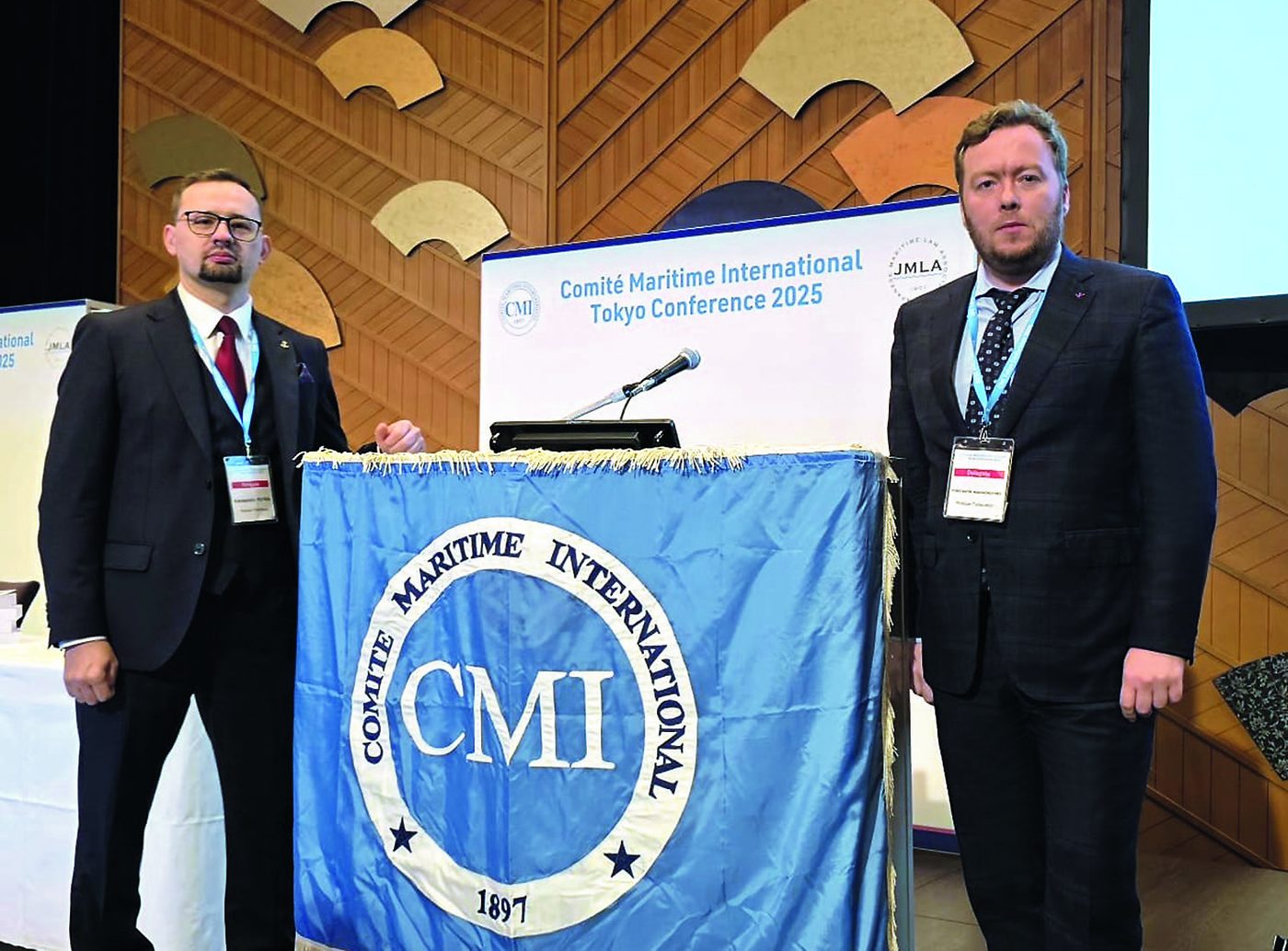
Konstantin Krasnokutskiy, President of the Russian Maritime Law Association (RUMLA), and Vice-President Konstantin Putrya pictured with the CMI flag
A Threat to the Existing Bill of Lading System
For nearly three years, a dedicated working group of the United Nations Commission on International Trade Law (UNCITRAL) has been developing a convention on negotiable cargo documents. The aim of the project is to introduce an entirely new document of title for the carriage of goods by any mode of transport, modelled on the existing maritime bill of lading.
Representatives of the CMI are actively engaged in discussions surrounding this novelty. In their view, the draft convention should include a provision explaining how the new instrument aligns with the existing legal regimes, namely, the Hague-Visby Rules and the Rotterdam Rules. Without such clarification, there is a risk of confusion when integrating the proposed changes into the current bill of lading system.
CMI’s dedicated working group outlined its main concerns regarding the proposed text of the convention:
1. Lack of Clarity for Third Parties.
Negotiable cargo documents affect the rights of third parties, such as subsequent holders. The CMI notes that the rights of such holders will be governed by the new instrument rather than by established principles of maritime law. Of particular concern is the wording of Article 7(1), which defines in extremely abstract terms what rights are deemed to be “included” in the document. Article 1(3), for its part, may result in contradiction with other international conventions, thereby creating legal risks for States Parties.
2. Contradictions with the Rotterdam Rules.
Although negotiable freight documents may fall within the definition of a “negotiable transport document” under the Rotterdam Rules, Article 1(3) of the new instrument has the potential to supersede their provisions. This poses a threat to the coherence and stability of the legal framework established by the Rotterdam Rules.
3. Entry-into-Force Threshold.
The CMI has criticised the requirement of only three ratifications for the convention to enter into force. Given that the new instrument may supersede existing rules governing bills of lading, the CMI advocates for a higher threshold, akin to that set under the Rotterdam Rules.
The CMI has also expressed support for allowing states to enter reservations to the new instrument. Following a meeting of its dedicated working group, CMI representatives resolved to continue maintain dialogue with key stakeholders, including FIATA and the GSF. Their principal aim is to reduce potential risks to the maritime industry arising from the adoption of the new convention and to ensure legal certainty for all market participants. The 58th session of the UNCITRAL, taking place this summer, is expected to be a turning point in finalising the text of the convention.
Harmonisation of Maritime Law in the Face of New Realities
Several high-ranking officials delivered welcoming speeches at the opening of the conference on 14 May, including Ann Fenech, President of the Comité Maritime International (CMI); Arsenio Dominguez, Secretary-General of the International
Maritime Organisation (IMO); and Satoru Mizushima, Vice-Minister for Transport of Japan.
The event continued with the traditional Francesco Berlingieri Lecture. This year’s speaker was José Angelo Estrella Faria, former Secretary-General of UNIDROIT. His presentation bore the title “The Comité Maritime International and the Harmonisation of Maritime Law: Achievements, Partnerships, and Challenges.” José Angelo Estrella Faria examined the process of developing maritime legislation provisions, drawing on the experience of drafting both the Rotterdam Rules and the Beijing Convention on the Judicial Sale of Ships. He believes that achieving timely approval of such instruments has become particularly challenging today due to the large number of stakeholders involved; before any topic can be brought to intergovernmental discussion, multilateral consensus must first be established.
Lex Maritima in its Final Form
It took more than three hours of debate on the finalised Lex Maritima draft, in which 25 General Principles of Maritime Law are outlined and structured in seven parts. The document had been in development for over a decade under the leadership of Dutch professor Erik van Hooydonk, who carried out most of the foundational research himself.
There has long been a widespread belief that maritime law is founded on globally accepted basic principles and common customs. Extremely rare so far, however, have been the attempts to identify and compile these common principles of maritime law. The CMI Lex Maritima is the first elaborate instrument to do so.1
The Lex Maritima Principles are based on an in-depth comparative law analysis and objective evidence, can be considered universal. The academic research underlying this compilation is neutral with respect to legal systems, commercial interests, policy intentions and personal preferences.2 Particular attention was paid to ensuring that the document did not include provisions on which no international consensus has yet been reached.
Yet another latest version of Lex Maritima was unveiled in Tokyo, marking significant departures from the previous Gothenburg Draft. Members of the Russian delegation specifically raised questions about translating Lex Maritima into all six UN official languages: English, Arabic, Spanish, Chinese, Russian, and French.
The authors of the 25 General Principles of Maritime Law made it clear that translation efforts should be led by national professional associations. First by translating the core rules themselves, followed by their accompanying footnotes and commentaries. In the light of this response, the Russian Maritime Law Association resolved to establish a dedicated working group to handle the Russian translation of Lex Maritima.
However, such action will be possible only upon CMI’s official release of the document in its final version. During the preparation of this article, the International Maritime Committee’s website contained nothing beyond the Gothenburg Draft.
The Presidential Breakfast and Further Dialogue
As always, the Presidential Breakfast was once again held this year, bringing together leaders of all CMI member maritime law associations from around the world.
Meanwhile, day two of the conference addressed a comprehensive range of issues, spanning from technological digitalisation in the maritime sector and crew welfare initiatives to the complex regulatory challenges of autonomous surface ships and the environmental aspects of polar region shipping.
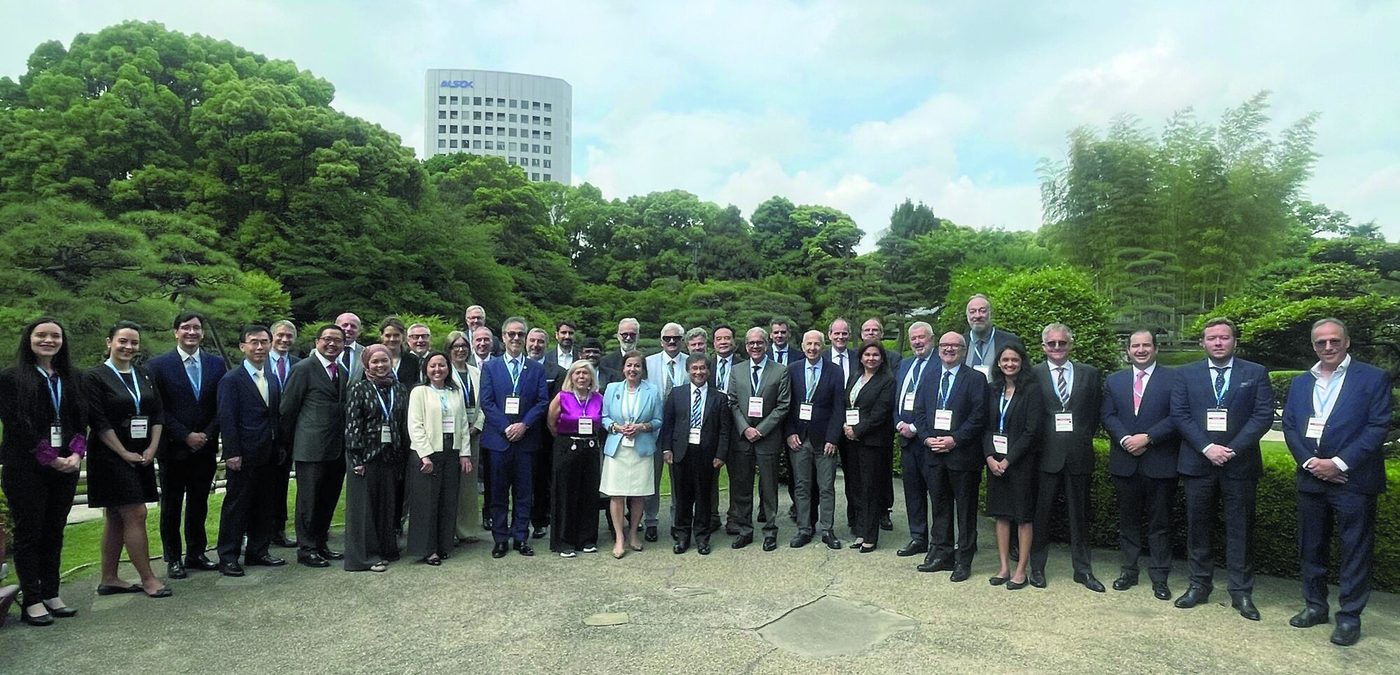
Presidents of CMI member associations pictured in the courtyard
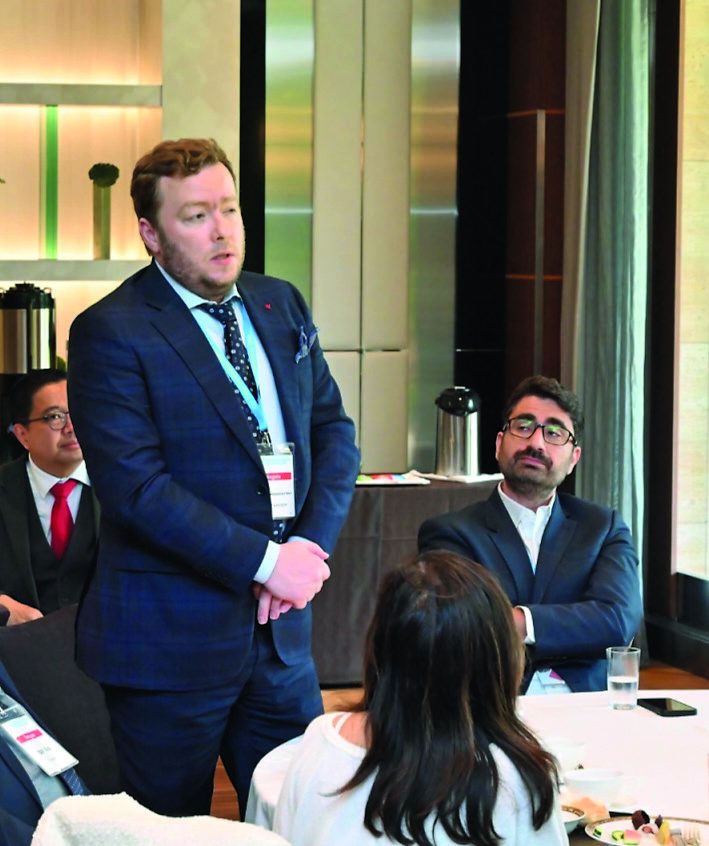
Konstantin Krasnokutskiy at the NMLAs Presidents’ Breakfast
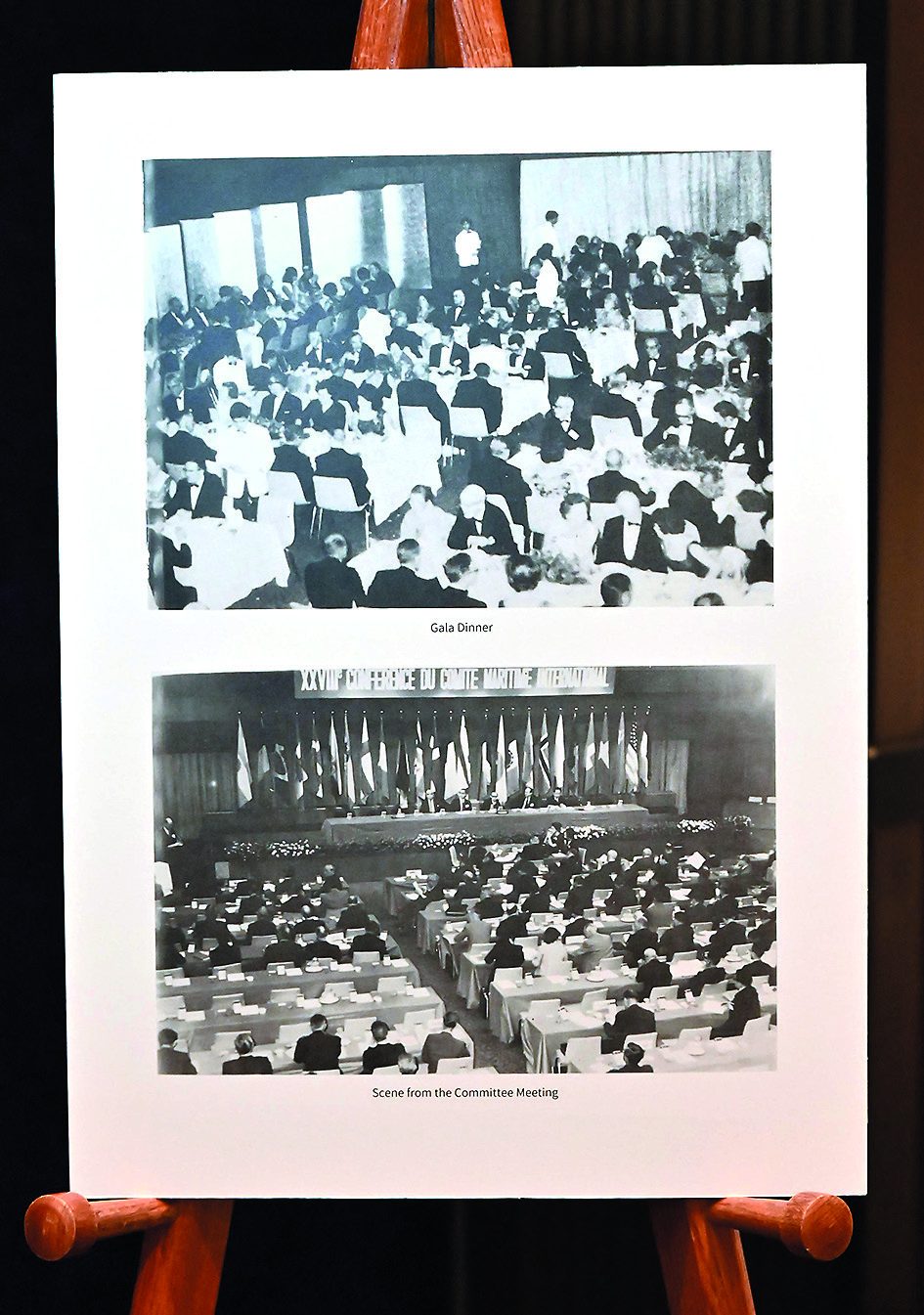
General Assembly held at the New Otani Hotel in 1969
Resolution, Obituaries and New Members
The event’s closing day featured the General Assembly session, which re-elected Anna Fenech (Malta) as CMI President, now entering her fourth consecutive term. John O’Connor (Canada) maintained his role as Vice-President. Notably, the Assembly convened in the very same New Otani Hotel hall that hosted the 1969 meeting.
Tributes were also paid to colleagues who had passed away over the past year. In the autumn of last year, Lionel Tricot, former President of the Belgian Maritime Law Association, died at the age of 103. During his 70-year legal career, he handled more than 15,000 cases across various European cities, including Antwerp, Brussels, Paris, Nancy, and others. Speaking about the complexities of maritime cases, Tricot once remarked: “Unlike on the road, there are no traces on water, which makes resolving such disputes particularly challenging.”3
Another obituary was dedicated to Freddy Belisario, former head of the Venezuelan Maritime Law Association.
The CMI also admitted four new members, including the national maritime law associations of Guatemala and Montenegro, along with two individual members: Lars Rosenberg Overby and James F. Moseley Jr. The first one is one of Denmark’s most renowned maritime lawyers, with 30 years of experience. He is currently writing his doctoral thesis at the Scandinavian Institute of Maritime Law, based at the Faculty of Law of the University of Oslo. James F. Moseley Jr. is a partner at the American law firm Moseley Prichard Parrish Knight & Jones, which was established in 1906. He has been involved in the work of the Comité Maritime International since 2018.
The programme also included the presentation of reports on the activities of international working groups and standing committees.
| CMI International Working Groups | CMI Standing Committees |
|---|---|
| Cybercrime in Shipping | Charitable Trust |
| Decarbonisation | Publications and Social Media Committee |
| Maritime Autonomous Surface Ships (MASS) | CMI Young Lawyers |
| Mobile Ofsfhore Renewable Units (MORU) | Implementation of International Conventions and Promotion of Maritime Conventions |
| Negotiable Cargo Documents | Marine Insurance |
| Polar Shipping | Ratification of Rotterdam Rules |
| Revision of 1910 Collision Convention and Related Instruments | On the Harmonised Interpretation of the Test for Breaking the Owner’s Right to limit Liability under IMO Limitation Conventions |
Winners of the CMI Competitions
The Young CMI Essay Prize Winner for 2024 – Albano Gilabert Gascón (Spain)
Subject: “Standing of the Hull Insurer vis-à-vis Sub-Charterers: The Possessory Title Principle”4
for 2025 – Diana Liashenko (Ukraine)
Subject: “Marine Environmental Damage during Wars: Compensation Mechanisms and Ukraine’s Perspective”5
IMLI (International Maritime Law Institute) Prize Winner for Best Overall Performance for 2024 – Ante Vojkovic (Croatia)
Subject: “A Legal Analysis of Pollution Damage Claims in Case of Pollution by Oil and Bunker Oil: Understanding the International Regulatory Framework and the Specifics of the Croatian Legal System”
CMI Assembly Resolution on The CMI Lex Maritima – The Tokyo Principles Adopted in Tokyo by the 44th CMI Conference
The 44th Conference of the Comité Maritime International (“CMI”),
Bearing in mind the purpose of the CMI, in accordance with its Constitution, ‘to contribute by all appropriate means and activities to the unification of maritime law in all its aspects’,
Noting that maritime law contains numerous specific concepts and rules, some of which differ considerably from related institutions in other branches of the law,
Noting that despite national divergences maritime law largely rests on a number of general, universally shared principles, known as the Lex Maritima,
Considering that the CMI as a worldwide umbrella of maritime law practitioners is the appropriate organisation to identify, compile and disseminate these universal principles;
Wishing to enunciate the universal foundations of maritime law, thereby clarifying its specificities and contributing to its international uniformity,
Acknowledging that the CMI’s International Working Group on the Restatement of the Lex Maritima (“the IWG”), established in 2014, has carried out substantive comparative law research in order to identify, compile and articulate these universal principles, based on extensive references to legal sources collected worldwide, including conventions, codes, statutes, case law, doctrine and model contracts and clauses,
Convinced that this compilation of the Lex Maritima can serve various useful functions, including as an educational tool, as guidance for national and international legislators and, where the positive law permits so they may also serve, as an additional source of general principles of the Lex Marittima.
Stressing that this compilation of the Lex Maritima does not intend to derogate from the positive maritime law at either international or national level, but merely to serve as a supplementary tool;
Stressing that by adopting this Resolution and thereby adopting the compilation of the Lex Maritima, the CMI does not intend or suggest to have given this compilation any special authority or supremacy over other available sources evidencing general principles of the maritime law, maritime usages or maritime practice;
Noting that a first complete version of ‘The Draft CMI Lex Maritima’, known as ‘The Gothenburg Draft’ was submitted by the IWG in 2024;
Noting that the IWG has prepared ‘The Draft CMI Lex Maritima – The Tokyo Principles’, which are attached to the present resolution;
Adopts the attached document as ‘The CMI Lex Maritima – The Tokyo Principles’. and Authorizes the Executive Council to consider in cooperation with the IWG any linguistic and grammatical inaccuracies and to make the necessary editorial corrections to the adopted document, before its publication.
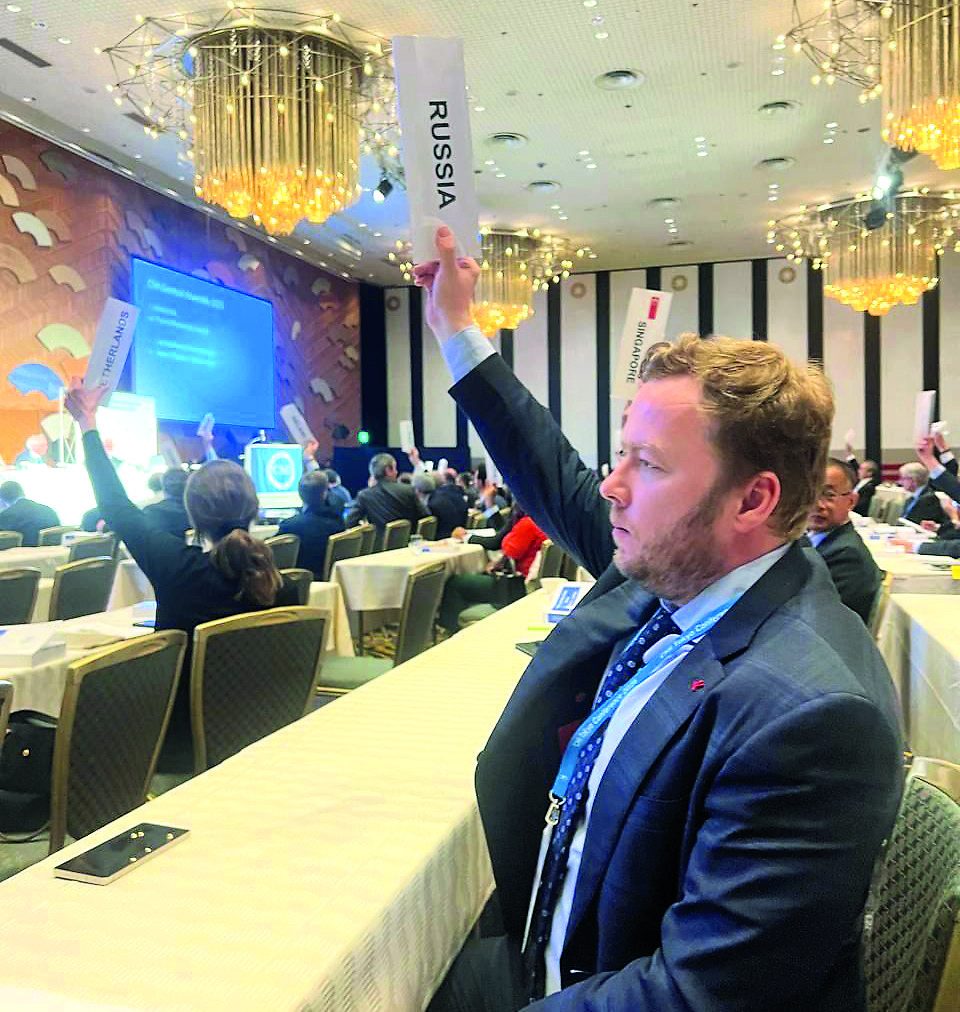
Konstantin Krasnokutskiy voting on the adoption of the resolution approving Lex Maritima
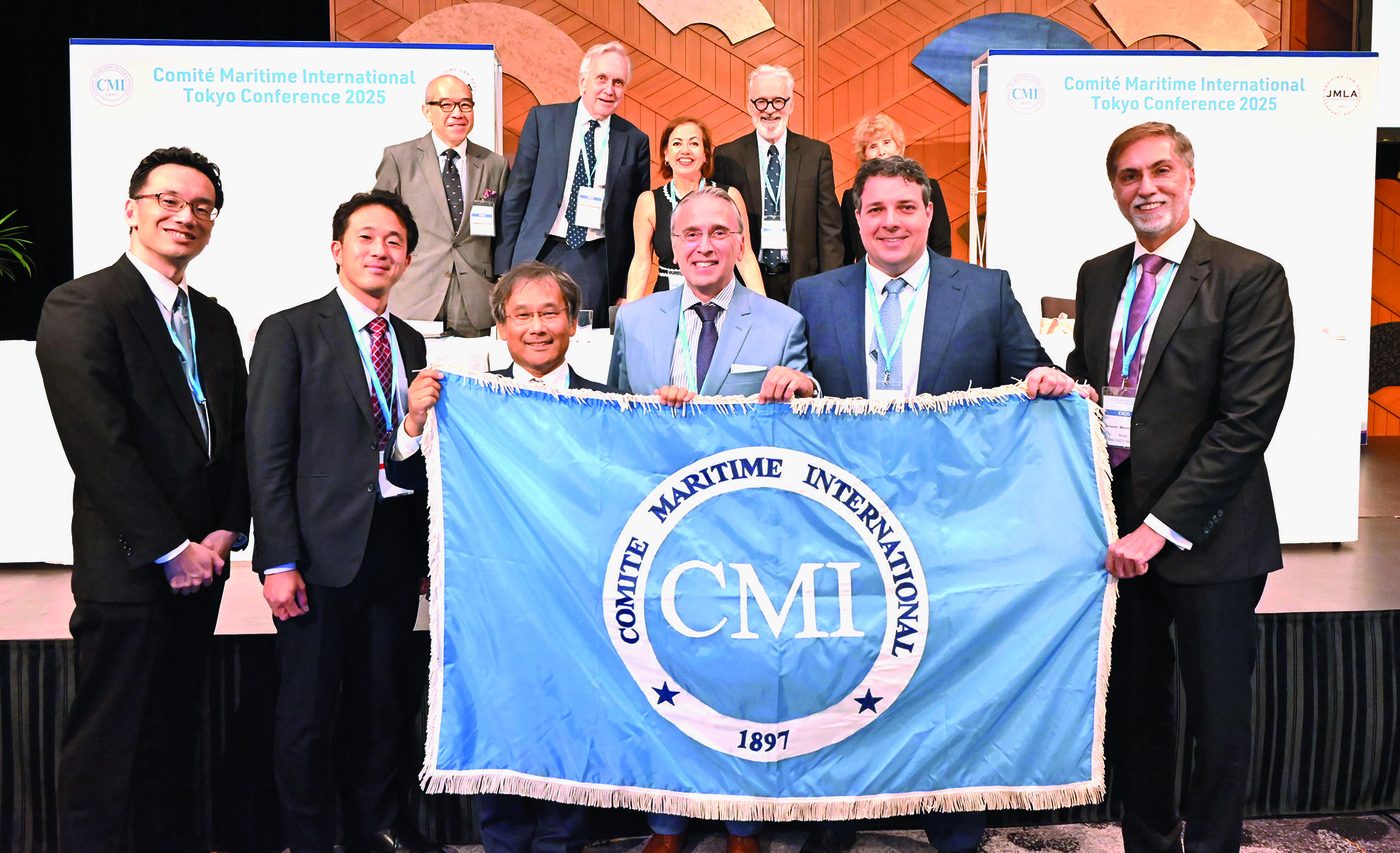
Representatives of the Japanese Maritime Law Association hand over the CMI flag to their colleagues from the Brazilian Maritime Law Association
One of the most significant outcomes of the Assembly meeting was the adoption of a resolution approving Lex Maritima, following the incorporation of several stylistic revisions.
The Assembly concluded with the CMI flag handover ceremony, in which representatives of the Japanese Maritime Law Association passed the flag to their Brazilian colleagues. The next conference of the Comité Maritime International will take place in Rio de Janeiro in May 2026.




Notes