Journal news
Maritime Law: Problems and Prospects
1.Where do students study maritime law? Is there a bachelor’s or master’s degree programs in this field in Russia? What does a specialist need to know?
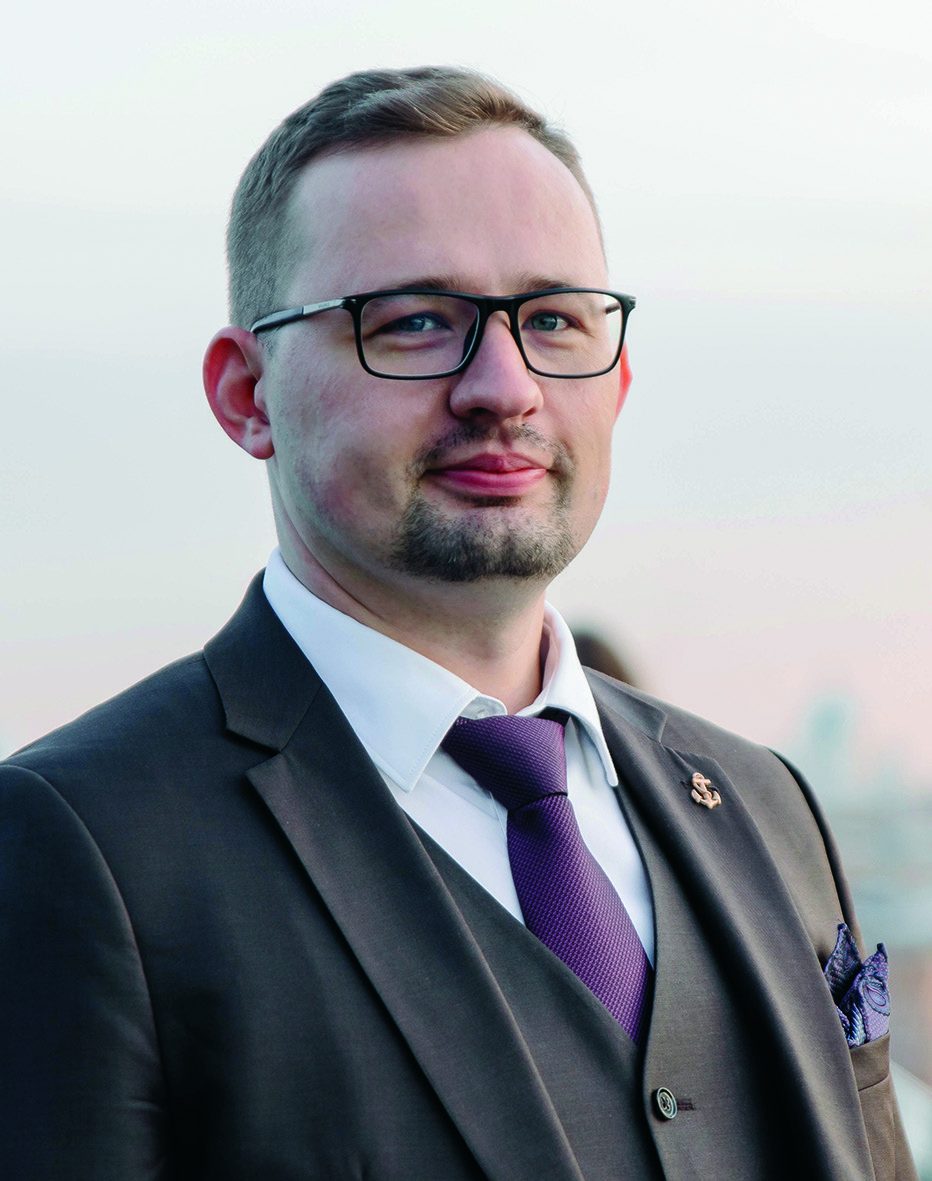
KONSTANTIN PUTRYA: If we talk about maritime law in the private law sense, which is what I do mostly, the question is quite complicated. As far as I know, there are courses of maritime law in specialised “maritime” universities (for example, Admiral S.O. Makarov SUMRF), but the specifics of a technical university impose a significant impact. If we speak exactly about leading law universities, the efforts of mine and my colleagues have been reviving courses devoted to maritime law in recent years. First of all, I am talking about the National Research University Higher School of Economics (St. Petersburg, Moscow), St. Petersburg State University, and the Russian School of Private Law. As far as I know, a course on maritime law at the National Research University Higher School of Economics appeared in 2020 in the last year of bachelor’s degree, and at the Russian School of Private Law in 2021. It seems to me that there is a genuine interest in this course among students, and it will only grow. I lecture maritime law at the National Research University Higher School of Economics, this course is held by Anna Arkhipova at the Russian School of Private law, and, at St. Petersburg State University, Alexey Karchyomov leads a course “public maritime law”.
My opinion: to be an excellent maritime law specialist, you first of all need to learn civil law and strengthen your knowledge in international private law.
Unfortunately, there is a critical lack of not just high quality literature, but modern maritime law literature itself for maritime law education in Russia. In this situation, we have to turn to foreign literature. We are trying to overcome this problem, we have created Maritime Law Journal, in which we publish reviews of judicial practice, scientific articles, review of “maritime” disputes, their statistics, as well as novelties of literature. Russian Maritime Law Association (RUMLA) regularly replenishes its library of maritime law with many books, both pre-revolutionary and Soviet, as well as modern foreign ones.
I can say for sure, that the maritime law is taught well in some foreign universities, where there are wonderful schools of teaching with their own history. Although they teach, of course, foreign law, maritime law of most countries in many respects draws its inspiration from international sources (i.e., different conventions) which lets, for example, a specialist with Russian and foreign education feels comfortable both in Russia and abroad, if we speak about work.
If we speak about teaching the maritime law in Russia, then most often the course is constructed according to the structure of the Merchant Shipping Code of the Russian Federation. Since the issues of public and private maritime law are rather closely intertwined in the maritime law course, the issues of public law are also touched upon. There is no approved unified program on this subject. At the moment, this course is most often taught as a special one, that is why in each particular case the lecturer develops an individual program, proceeding from their understanding and experience of how to present the material to the students in the best way.
During the course at the National Research University Higher School of Economics, I try to give a general idea of the subject, as well as focus on the most interesting and unusual institutions of maritime law. I pay much attention to the issues that most often arise in the work, first of all, through the prism of the judicial practice. We necessarily study the practice of the Russian commercial courts and some arbitrations if such awards are available. For the most interesting issues, we turn to foreign judicial practice. This is due to the fact that many institutions of maritime law are adopted from other legal orders, in which they have existed for centuries. For example, we can learn a lot about legal nature and economic meaning of demurrage (demurrage in the Russian Merchant Shipping Code terminology) from classical and recent decisions of English courts.
2. What do maritime lawyers do? Tell us about your work. Who are your clients, what tasks do you solve, what does your working day look like? What are the most frequent categories of clients, who is looking for maritime lawyers now and needs their services the most?
K. P.: Like most lawyers from any other field, lawyers involved in the maritime industry mostly deal with either contract work or dispute resolution. Notably, lawyers practicing maritime law are also divided by internal specialization, wet&dry shipping, i.e. on issues that relate to the “onshore” and “paper” part of maritime law (e.g. work with charterparties, bills of lading), and, for example, on issues of investigation of maritime accidents, damage to ships, cargo wetting, etc., that is, issues that arise during the transportation.
As for me, I have two main areas of work, first of all, it is representing clients in commercial courts and international commercial arbitration, as well as advising on various particular sensitive issues, preparing contracts, legal opinions, memorandums. Since I am a partner of a law firm, I spend a considerable amount of time on PR and business development. Some of my time is spent acting as an arbitrator, writing articles for Maritime Law Journal, promoting maritime law in Russia within RUMLA, and, of course, lecturing. Last year, RUMLA became a member of the Comite Maritime International (CMI), and now we are actively preparing for the Russian delegation’s participation in the next CMI conference in Antwerp, where various maritime law issues will be discussed.
Unfortunately, in Russia, the services connected with the maritime law are not in great demand, and it is not even taken into account the fact that it is a narrow, niche sphere. Maritime lawyers in foreign jurisdictions with rich “maritime history” of merchant fleet are in much more honour. It is paradoxically for our country.
Most often our clients are P&I clubs, foreign and Russian shipowners and charterers, cargo owners, banks, ports, insurance companies, large forwarders. In general, everyone involved in international trade is a participant of merchant shipping.
Now, it is a rather complicated time, and everything is changing, so far, it is difficult to say unequivocally who is looking for maritime lawyers. I can only say that specifically at the moment most often Russian and foreign companies need legal assistance in the context of violation and maintenance of the current contractual relations between them. There are quite a lot of such appeals of a sanctions nature. In particular, there are issues of assessing the prospects of litigation, the need for participation in court proceedings, there are issues of recognition of foreign arbitral awards and other issues.
3. Where do maritime lawyers work? Where is the best place to start a career? Where is it better not to go?
K. P.: The job of a lawyer with knowledge in maritime law is classically divided into the work of a legal adviser (in-house) or an external consultant. Legal advisers work most often in shipping companies, companies specializing in the export and import of commodities, insurance companies. There are both large companies with entire legal departments and small ones. The latter usually employ one or two people. However, more often, such companies have no lawyers at all; if necessary, they turn to external consultants on the most urgent and harmful issues. Some lawyers go to work in state organisations, for example, in the service of the seaport harbor master, in the field of customs.
Everyone chooses for themselves where best to start the career, based on their life goals. There is no general answer. In my system of coordinates the answer is unambiguous – an external consultant.
I believe that this is the best start, which allows you to get useful and varied experience. This includes various foreign trade issues, customs issues, dealing with border security, tax issues, and even labour law. Maritime law, in fact, is closely related to all of these fields in real life. If then the desire arises at the right time, they can choose a particular path, go into the in-house. However, in the majority of cases, consultants do not quit very often. It is too interesting work; such lifestyle very much drags.
If I was faced with the question of starting a career with the desire to realise myself in the field of maritime law, I would choose to work as an external consultant in a boutique or large firm with a maritime practice. Early in a career, a professional does not see the full picture well. Working as an outside consultant allows you to see it and understand many of the business processes. As you gain experience, you will see new opportunities and new areas of self-realisation.
4. What are the peculiarities and difficulties of working as a lawyer in maritime law? And what, on the contrary, do you like regarding this job?
K. P.: My colleagues and I always advise to forget about “maritime law”. Learn civil law and private international law, and arbitration process, and you will be happy. However, a young specialist will still face the peculiarities of the industry. They are determined by the economic relations that we deal with. First of all, it is the involvement of a foreign element in the legal relations.
The peculiarity is that it is likely probable that you will also need a knowledge of foreign languages, especially English.
The abundance of special terminology, abbreviations and incomprehensible acronyms (especially in charter parties, which are often written by non-lawyers) is also striking. This applies not only to the terms of contracts, but also to technical vocabulary, especially in the area of tort disputes.
It also should be noted the fact that maritime law is not isolated from other branches. Where one problem, seemingly isolated, arises, another problem from a related branch is highly likely to arise.
Complexity of work, in my opinion, is caused by the problem of lack of popularisation of maritime law, sufficient knowledge and understanding of the subject, which are formed in the university (as a rule, knowledge about maritime law is limited to knowledge of existence of the Merchant Shipping Code and a couple of conventions from civil law course and chapter about carriages), lack of specialised judicial compositions (specialised courts is only a dream). In everyday life of an average practicing lawyer, no matter what they do, they deal with issues of maritime law rarely. As a consequence, a lawyer is not able to get into the details quickly. Even if one manages to understand the legal issues, that is often not enough. You need to know the practice of applying norms, you need to know how some legal decisions may affect the development of the client’s problem situation.
I enjoy my work very much. I enjoy complex commercial disputes with a foreign element, I like finding non-standard solutions to overcome clients’ problems. I feel a bit isolated as a specialist since I am in a “maritime” community with its own industry peculiarities.
5. How is the maritime law developing in Russia and abroad? Can we predict that the demand for specialisation will increase? Or, on the contrary, will it decline?
K. P.: Frankly speaking, I do not see any problems for progressive, not explosive, growth of demand for maritime law services abroad. And this is not even my opinion but the opinion of my foreign colleagues, who are also involved in this field abroad.
In my opinion, the demand in Russia was already not too great against the background of a very narrow market for “maritime” legal services. Now, it seems to me, it will only fall in the global perspective. Before that, we will probably face a surge of all sorts of disputes, at least on the horizon of the applicable time limitations. We are already seeing this surge. This is due to the fact that after the well-known events, most market participants were confused, did not know how to act, and adopted a wait-and-see approach. Now, there is a little more certainty and movement has begun.
Of course, with the reorientation of the Russian economy, new markets will also open for legal services. This also gives some hope.
The only good news is that in the foreseeable future the world ocean will not disappear. Probably, the same relates to the global trade. This, one way or another, will lead to the need for legal support for this sector of the economy since, as we know, the vast majority of goods are transported by sea.
6. Have the sanctions against Russia affected the work of maritime lawyers? If yes, how?
K. P.: The answer to this question depends on where the lawyer works. If we are talking about lawyers focused on the Russian market, then, I suppose, it affects to a lesser extent. If we are talking about lawyers providing services to foreign clients, then it is more likely to have an impact. First of all, it is about the volume of legal services in the market. The economy is collapsing, foreign companies are leaving the country en masse and are not planning to develop or do business in Russia. Just at the beginning of February we had a request from a German client to develop a shipping business for the export of grains from scratch. Due to understandable reasons, the client abandoned the project. Now the movement in the market of legal services, where maritime law is present, is mainly kept by the problems within the already existing contractual relations of the parties which emerged as a result of the sanctions.
Interviewed by Natalia Romanova